Case Study / Product UX Lead
BNY Mellon
Pershing X
Advisory
Scroll
As the designated Product Owner and UX Lead, Zack Gort partnered closely with key stakeholders at BNY Mellon and Publicis Sapient, workshopping and interfacing directly with clients, facilitating UX workshops and design leadership across a fast-moving multi-track project pipeline.
The engagement centered on redesigning the Pershing X Advisory Experience — a complex financial advisory platform used by wealth managers and advisors to plan, propose, and manage client portfolios.
Zack managed timelines and expectations while providing guidance and mentorship to junior and associate UX designers across three parallel workstreams.

Three interlocking competency areas define the approach Zack brought to the engagement — from strategic research grounding to hands-on production and systemic innovation.
Strategic UX ideation and diligence supporting clients' objectives — leveraging informed best-practice and proven methodologies towards resolution. Working with data and insights from product & industry experts in alignment with project management and cross-disciplinary teams.
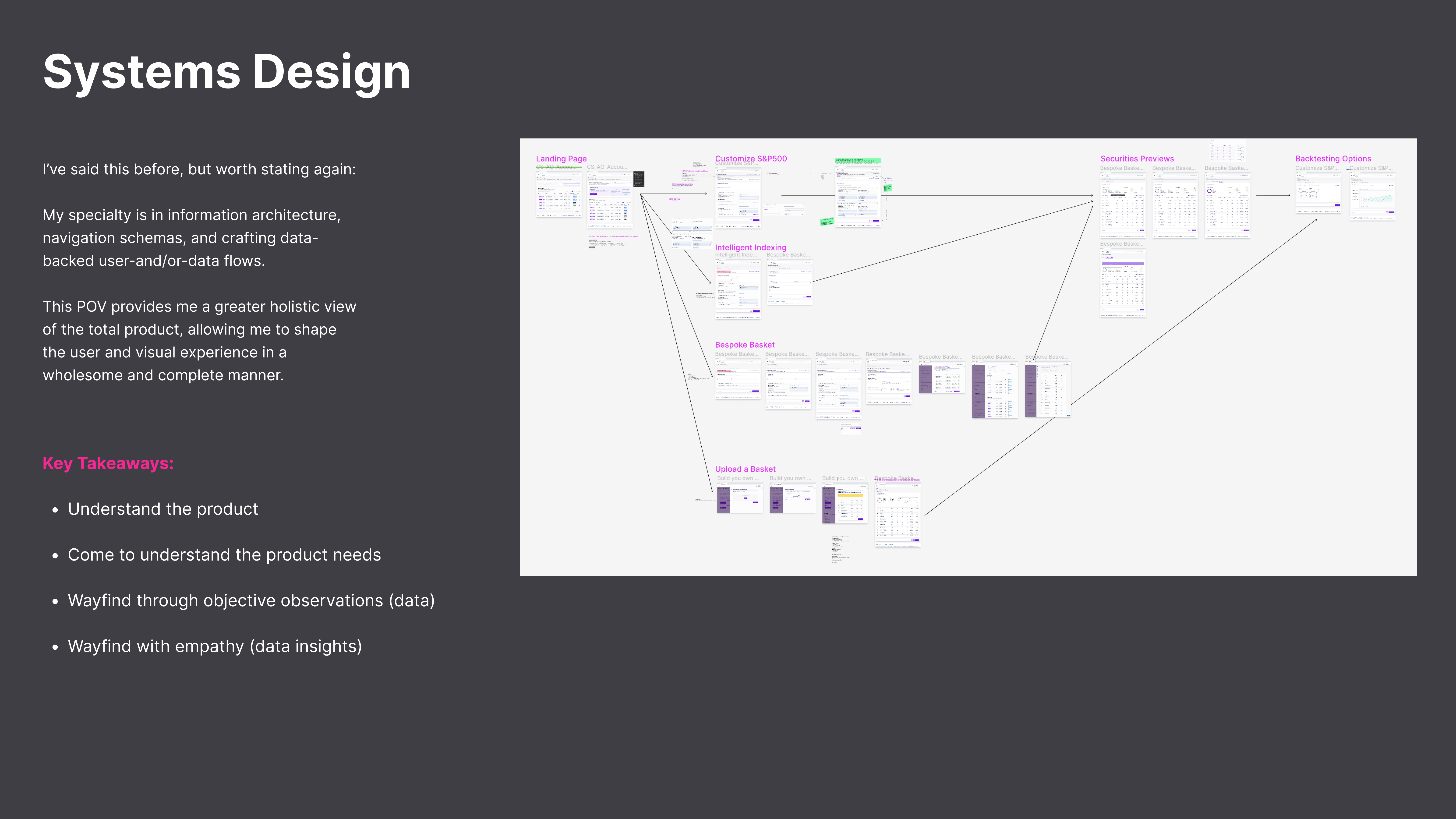
Expert in Information Architecture; crafting data-backed design systems to accommodate fluctuating taxonomy and content strategies. Customer journey mapping and distillation of complex, dynamic subjects through multi-variate project pipelines.
Active proponent for foundational and accessible design, approached in partnership with developers. Innovation stems from collective need, not individual desire — it's through team effort, not personal hubris, that the most productive means to fulfillment are found.
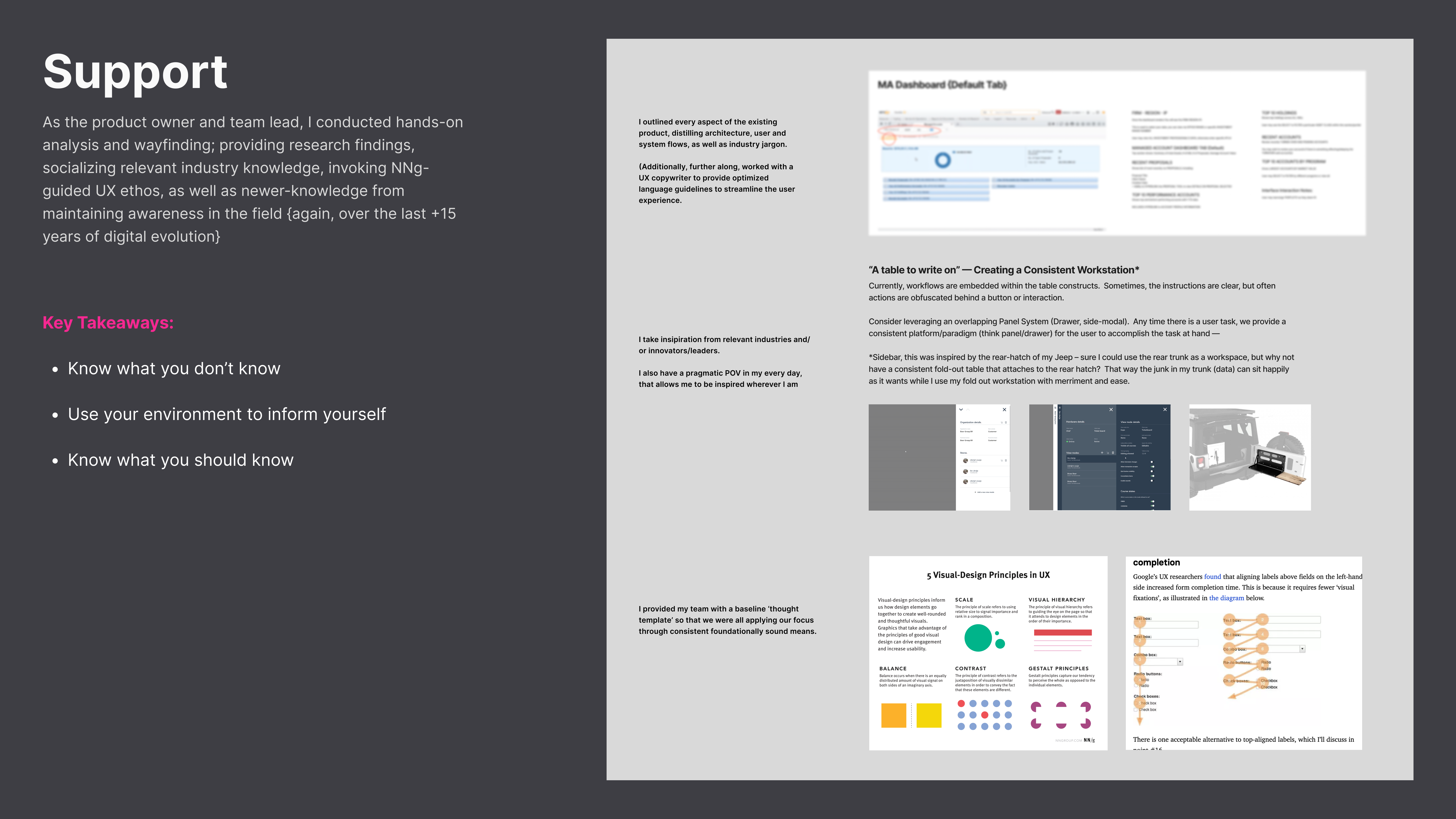
Zack conducted a holistic inventory of the existing Pershing X platform — distilling architecture, user and system flows, and industry-specific jargon. Every screen state, table pattern, modal, and navigation instance was catalogued to build a complete baseline understanding before any redesign work began.
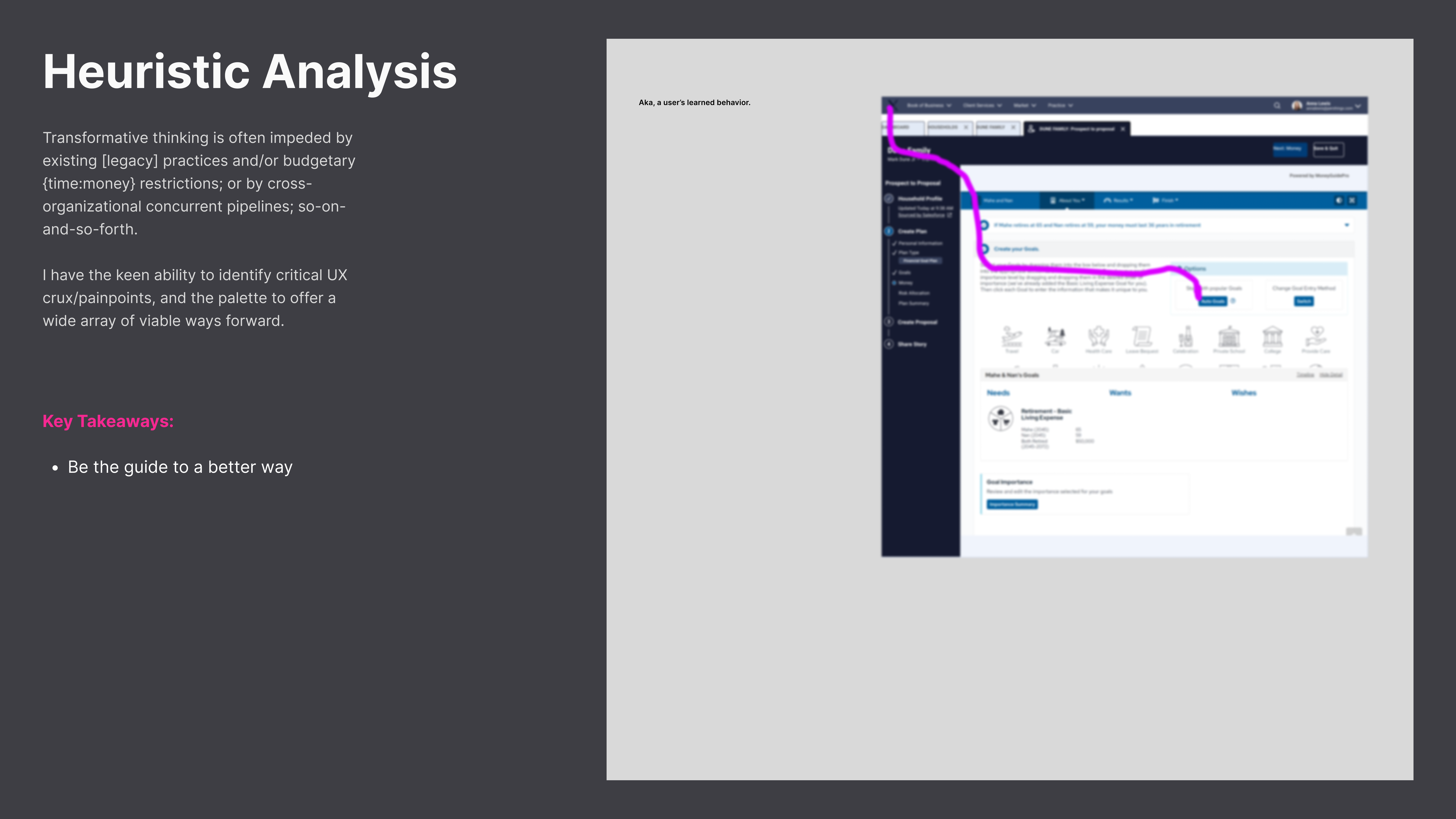
With the product documented, Zack applied heuristic analysis to identify critical UX pain points — the crux issues that transformative thinking often runs into due to legacy practices, budgetary constraints, or cross-organizational bottlenecks. Rather than cataloguing problems, this phase was about identifying a palette of viable ways forward.

As product owner and team lead, Zack conducted hands-on analysis and wayfinding — providing research findings, socializing relevant industry knowledge, and invoking NNG-guided UX ethos. He provided his team with a foundational "thought template" to ensure everyone was applying consistent, fundamentally sound design thinking.

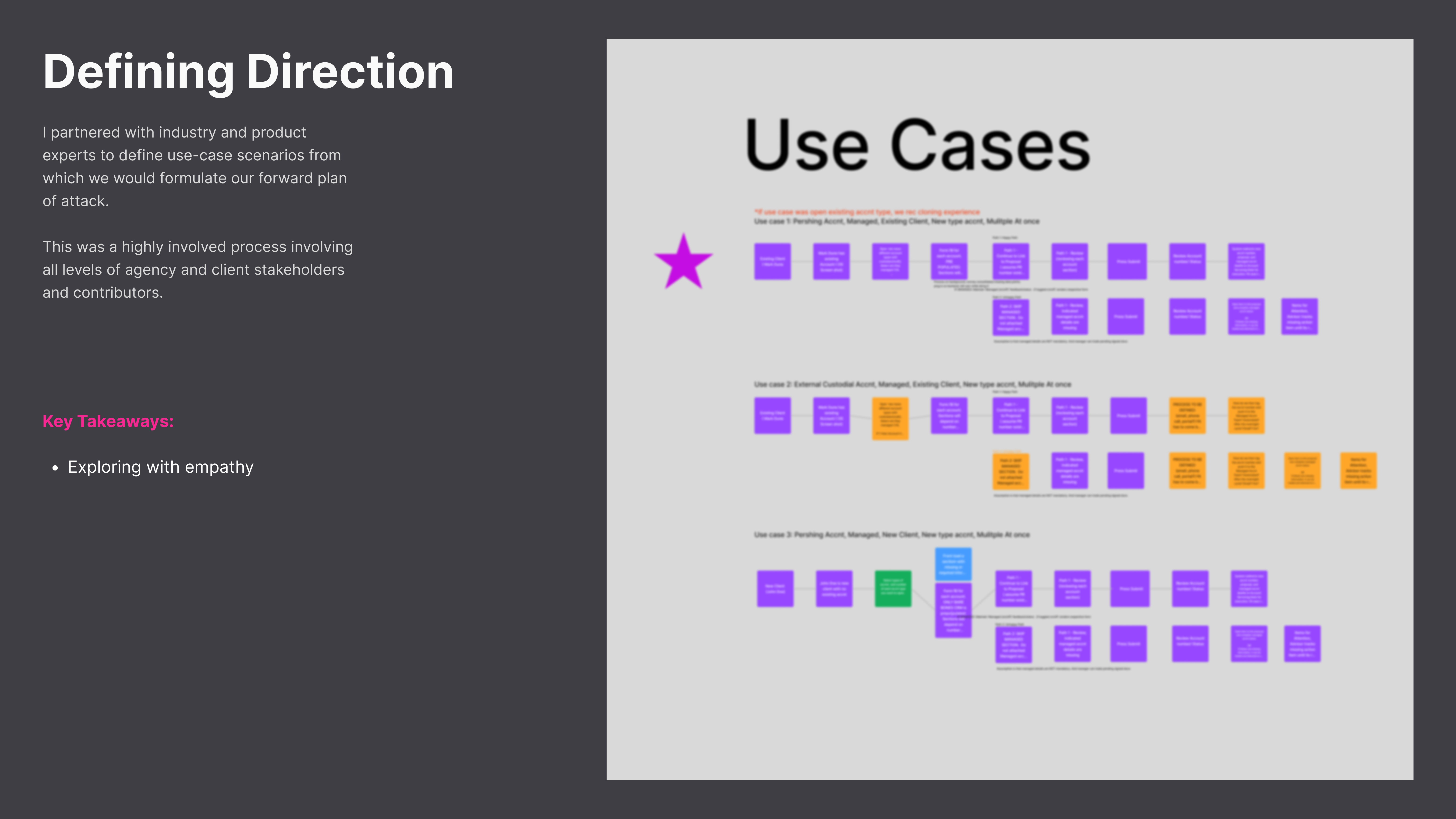
Partnering with industry and product experts, Zack defined use-case scenarios from which the forward plan of attack would be formulated. This was a highly involved process engaging all levels of agency and client stakeholders and contributors.
Three primary use cases were defined, covering Pershing Account / Managed / Existing Client / New type account flows — spanning single and multi-account scenarios, external custodial accounts, and onboarding new clients.

Don't attach yourself to a particular outcome. Allow yourself to be wrong. Have the humility to keep asking questions.— Zack Gort, on the collaboration mindset
/ClientOnboarding/OpeningManaged/<ClientID>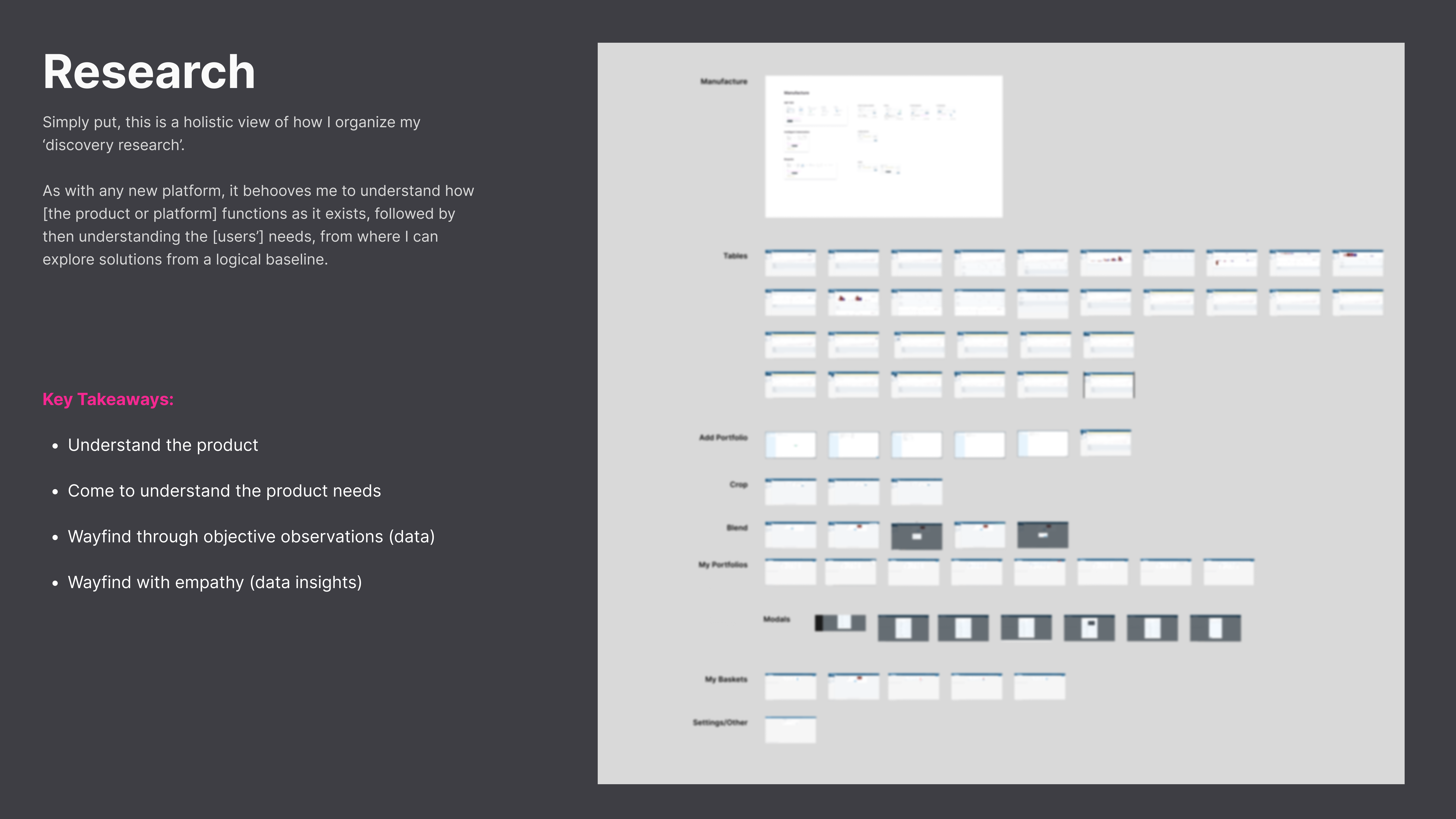
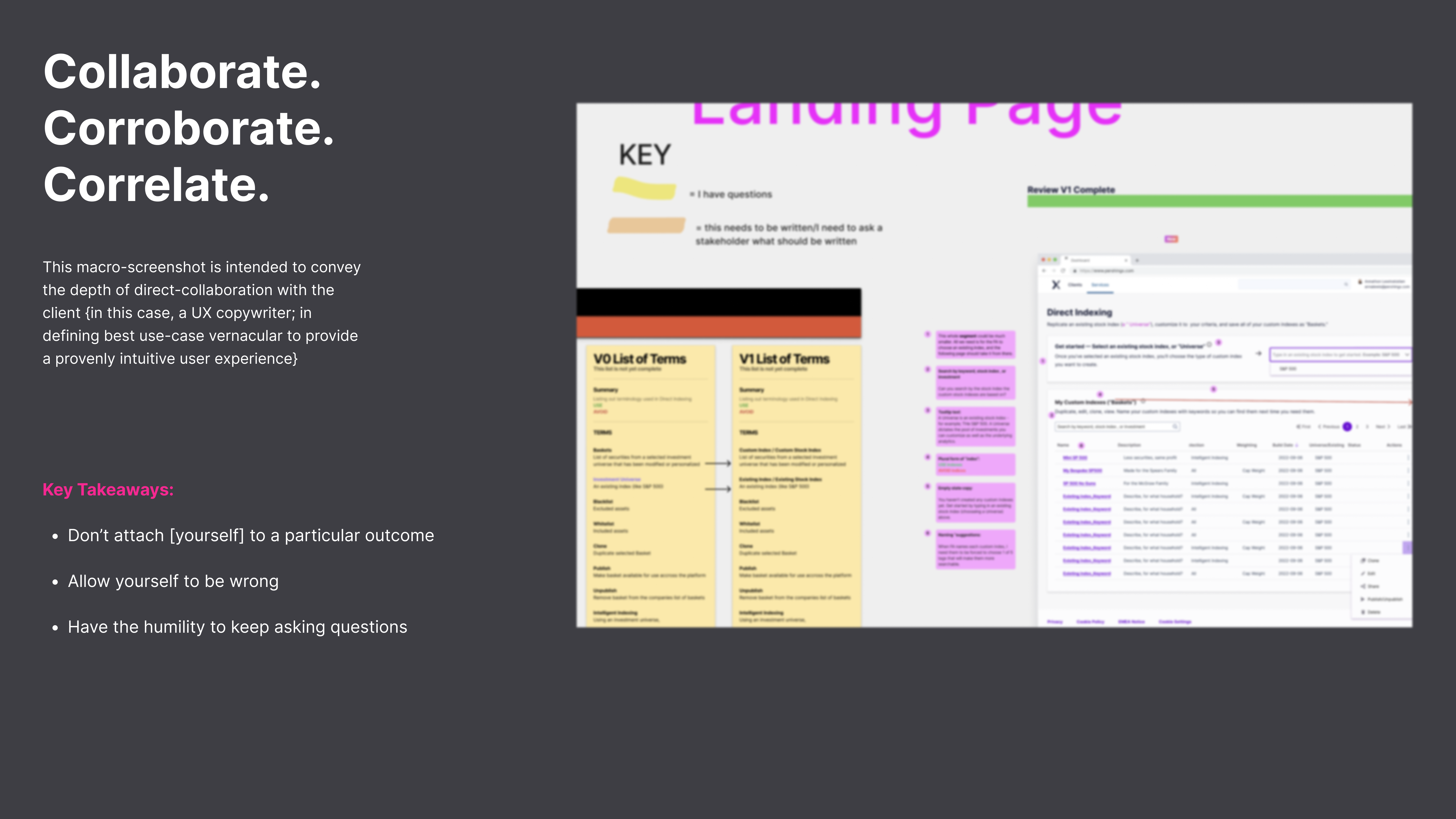
A macro-level view of the direct collaboration with the client — in this case, working with a UX copywriter to define best use-case vernacular and provide an intuitively aligned user experience. V0 and V1 terminology lists were iterated in tandem with actual screen designs to validate language decisions.
From initial concept sketches to fully-specified design systems, the work spanned every layer of the product — information architecture, user flows, navigation systems, and component libraries.
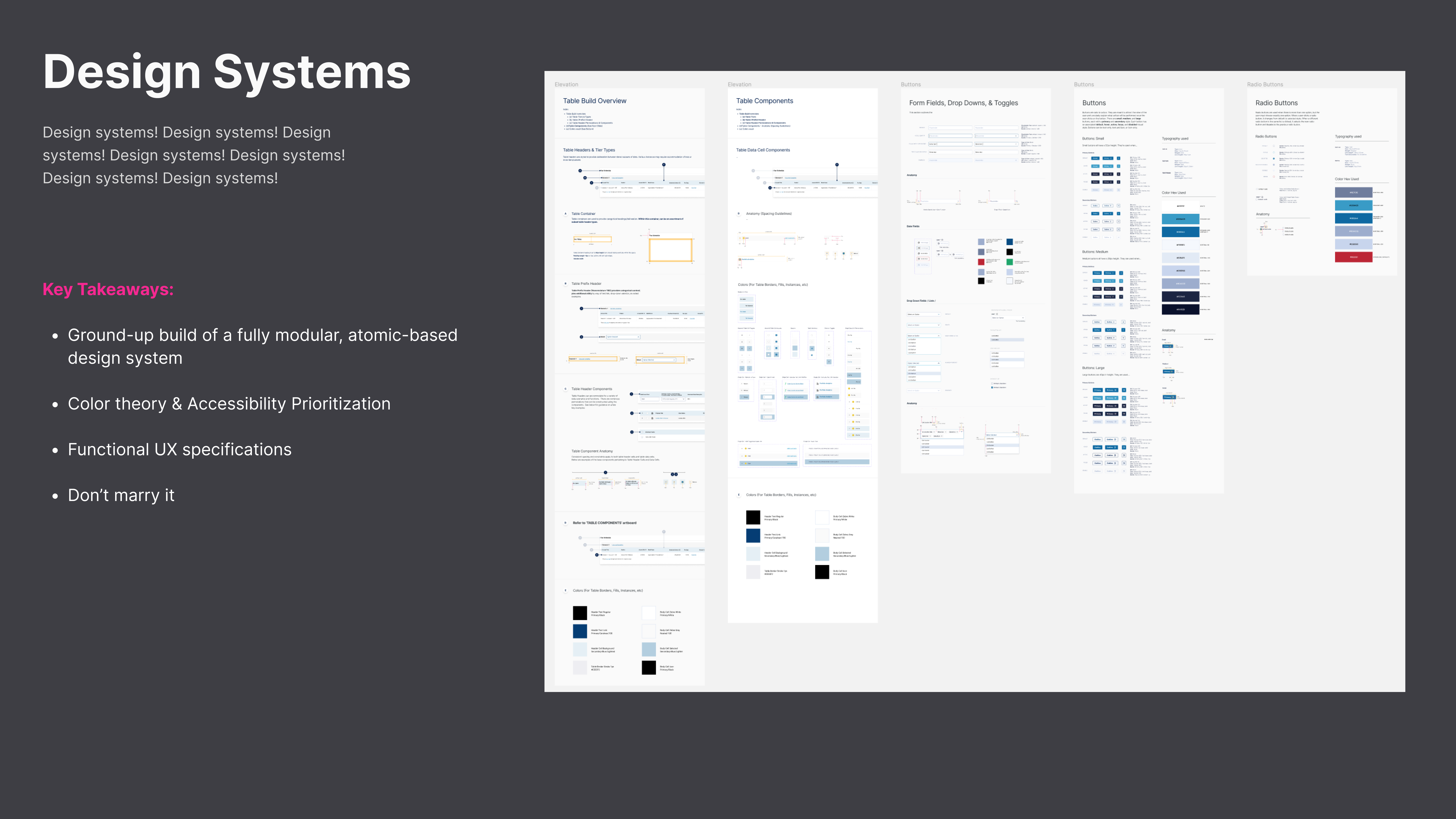
The design system was built from the ground up as a fully modular, atomic-based library — covering table build overviews, header types, data cell components, form fields, dropdowns, toggles, buttons, and radio controls.
Color theory and accessibility prioritization were baked in from the start, with functional UX specifications documented for handoff to development. The guiding principle: build it well, document it clearly, but don't marry it.
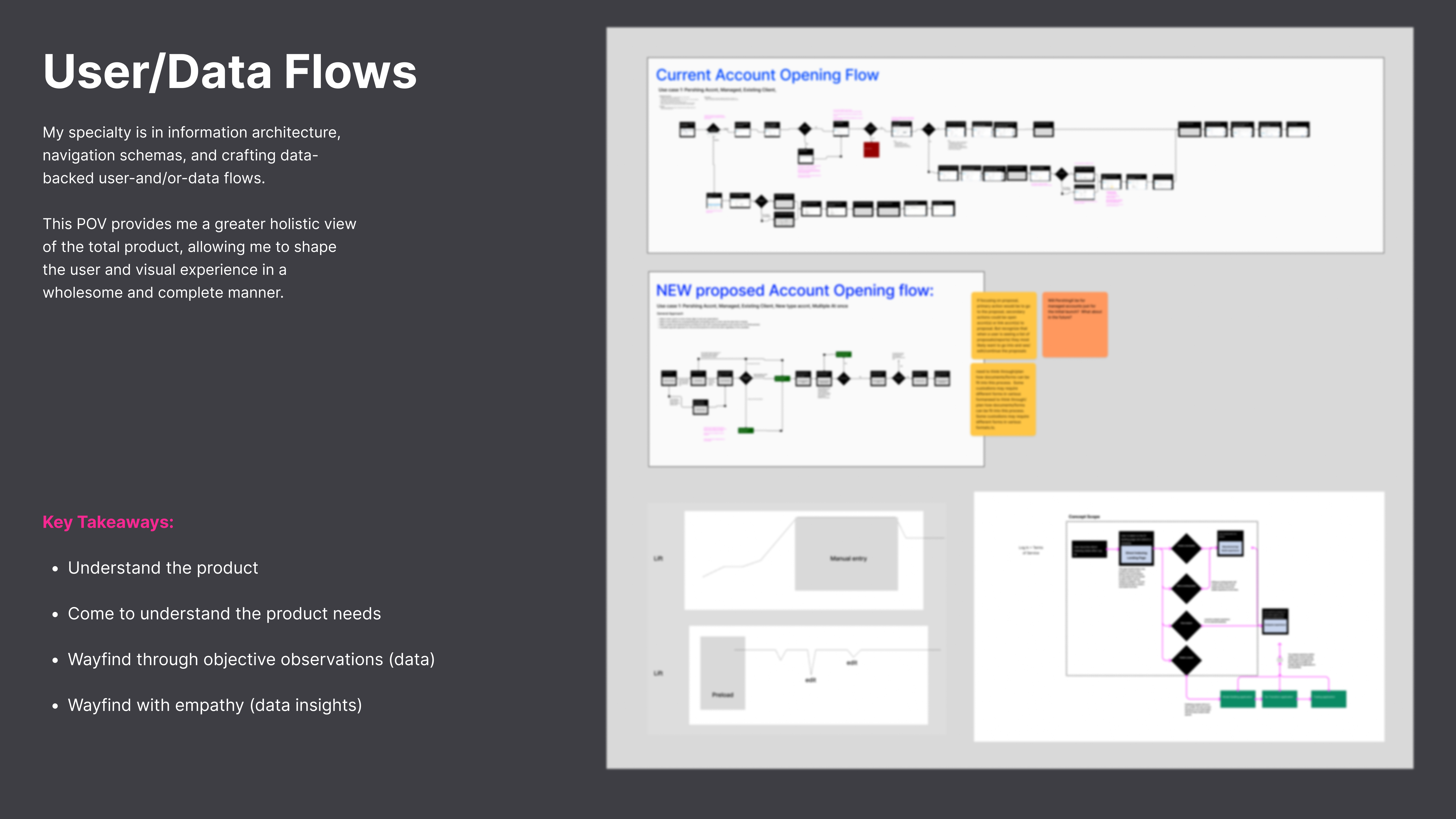
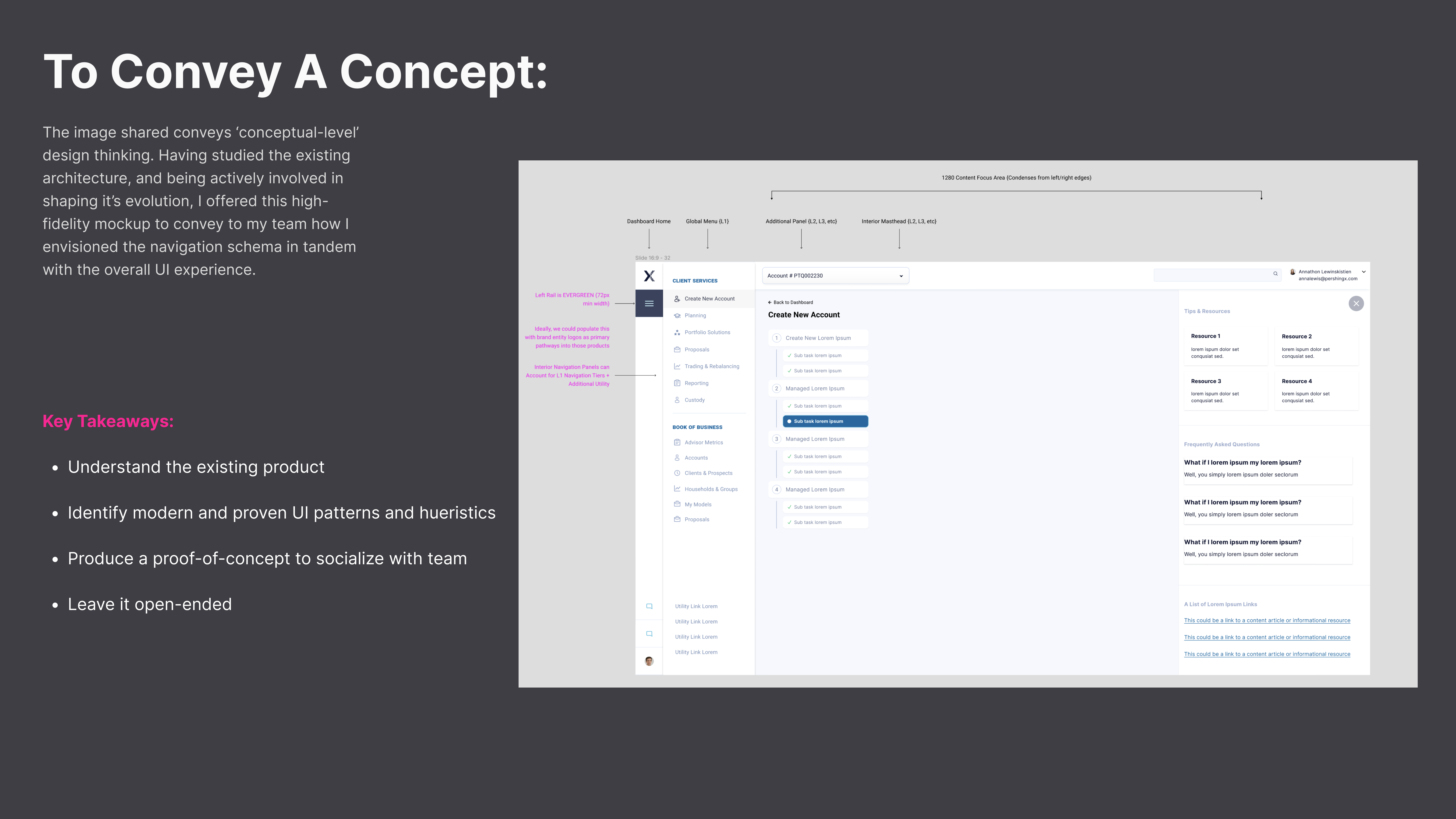
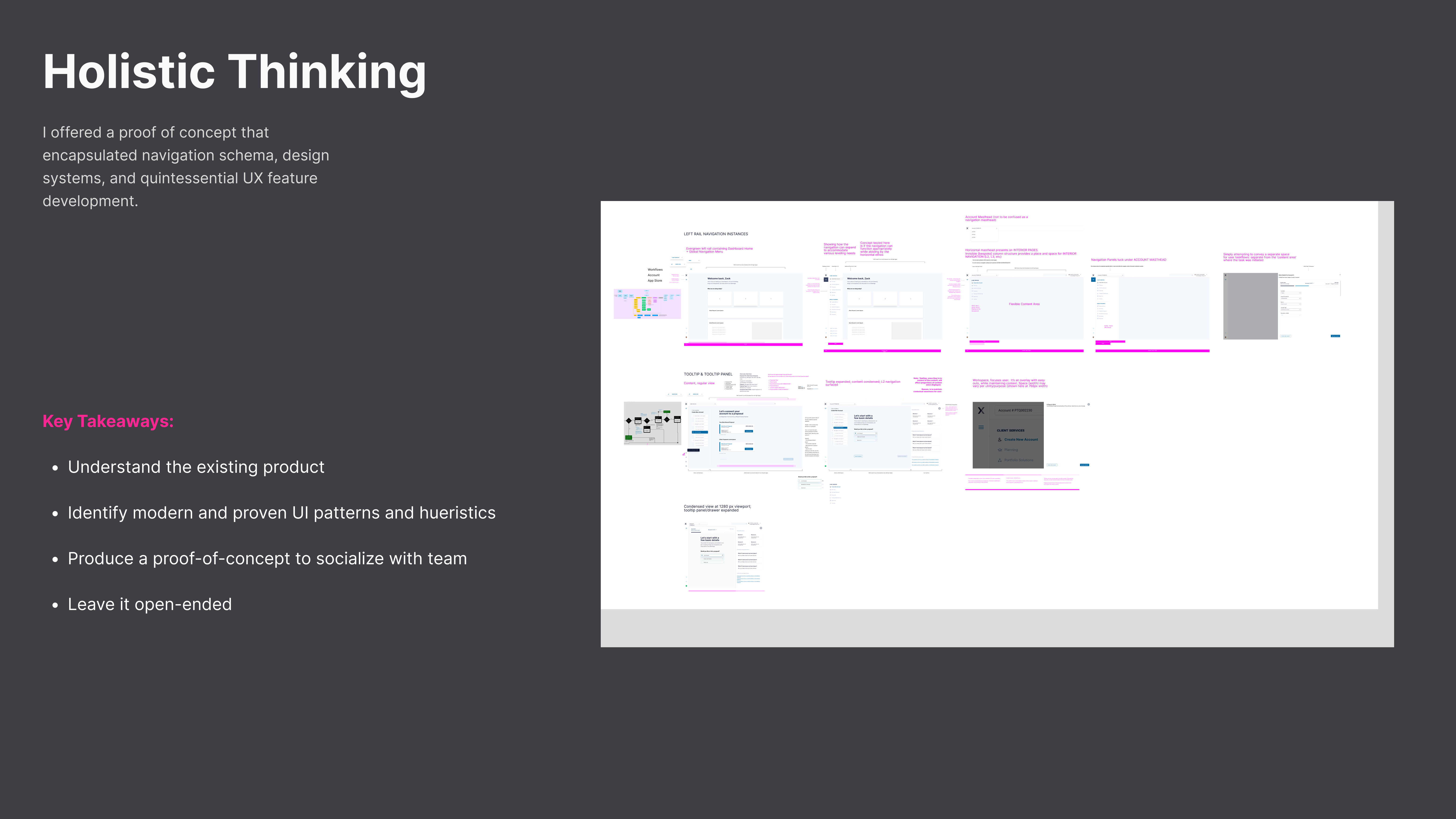
Zack's specialty is information architecture, navigation schemas, and crafting data-backed user and data flows. This holistic POV provided a greater, complete view of the total product — enabling him to shape both the user and visual experience cohesively, from the highest system level down to individual interaction states.
Deliverables included both current-state documentation and newly proposed account opening flows, comparing the existing process against a streamlined, multi-account capable redesign.
Lift Diagrams
Cognitive effort curves across the account opening workflow — manual entry vs. preloaded data. Each step plotted against user input burden, decision friction, and wait time.
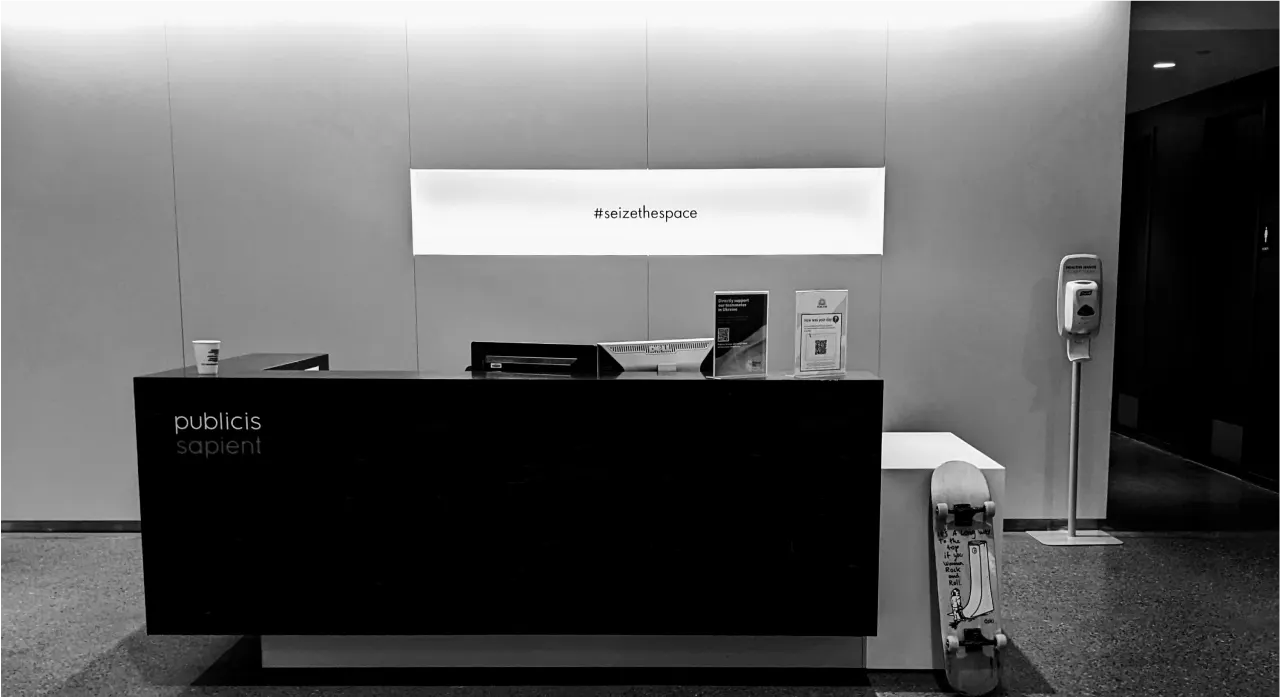
Zack showed up to the office every day. He committed to being a reliable partner, teammate, and resource to all he worked with. Through this approach, he fostered an engaging and productive team dynamic built on trust and transparency.
Leadership wasn't exercised top-down — it was embodied daily through physical presence, radical transparency in communication, and a genuine investment in the growth and success of every team member.

I'm an enabler; a promoter; a team cheerleader. I ask a lot of questions; I get all the answers. I get a [sh*t ton] done.— Zack Gort
Kaizen — a Japanese business philosophy of continuous improvement of working practices, personal efficiency, etc. It's not a moment; it's a mindset applied every single day.
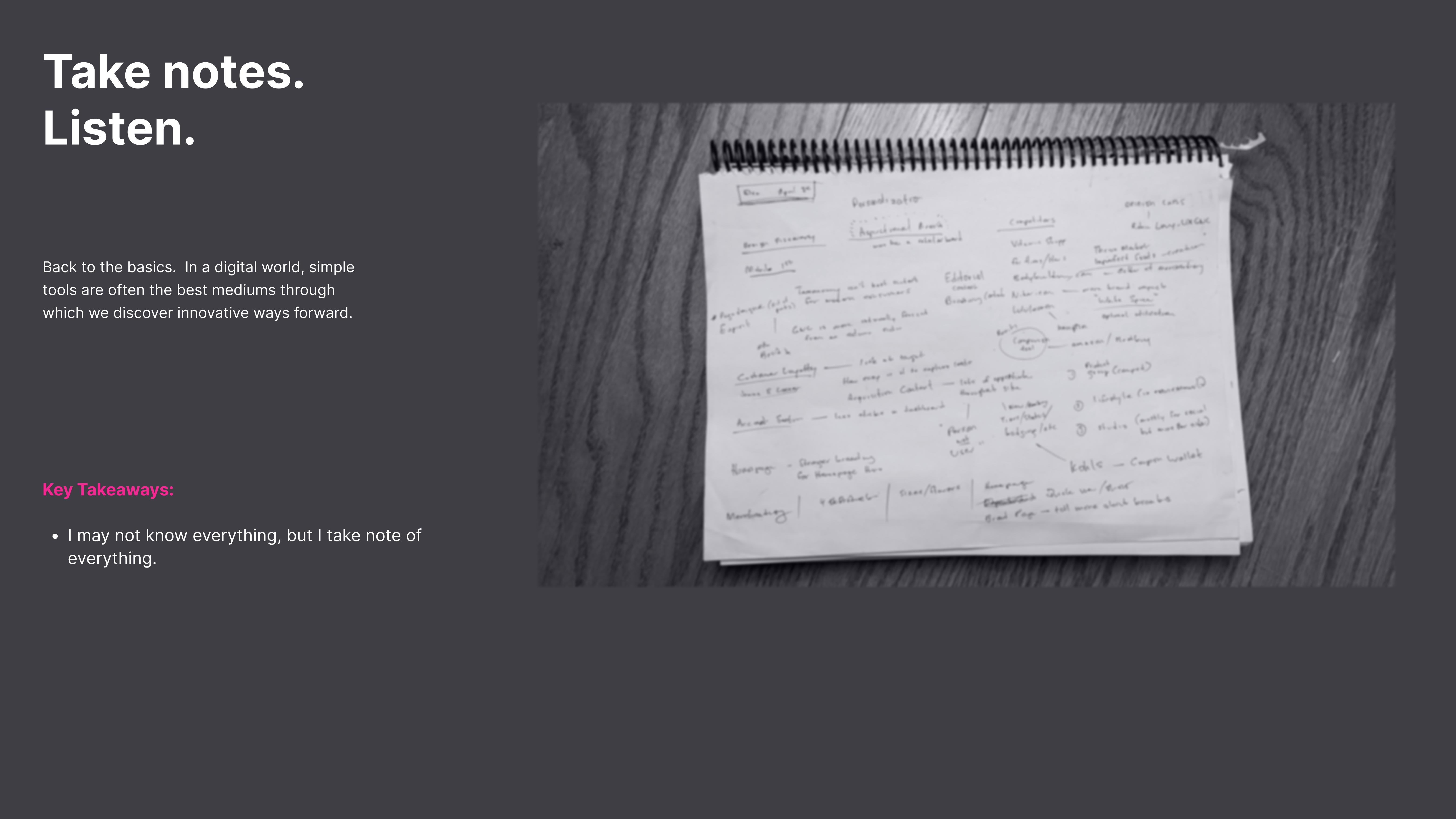
Back to the basics. In a digital world, simple tools are often the best mediums through which we discover innovative ways forward. Zack takes note of everything — because knowing what you don't know is as powerful as expertise itself.
Transformative thinking is often impeded by existing legacy practices and budgetary constraints. The role of the UX lead is to identify the crux, and offer a wide array of viable ways forward — not to be the loudest voice, but the clearest one.
A proof-of-concept should convey direction, not prescription. Understand the existing product, identify modern and proven UI patterns, produce a POC to socialize with the team — and then let the team make it better.
Innovation stems from a collective need, not individual desire. It's through team effort — not personal hubris — that the most productive means towards fulfillment are found. The best idea wins, regardless of where it came from.